
Did you know that nearly 61% of paid search budgets are wasted on ad clicks that never convert? If your PPC marketing campaigns aren’t delivering a solid return, you’re not alone. The good news? You can turn those wasted dollars into real results with the right strategies, essential insights, and a clear action plan. This guide unpacks why most businesses miss out on PPC success, the core elements you need to master, and how to fix your ppc ads for measurable growth—right now.
Why Most Businesses Fail at PPC Marketing: Startling Industry Statistics
PPC marketing is a proven way to drive targeted traffic and leads—yet a shocking percentage of campaigns never reach their potential. Let’s examine the numbers behind these missed opportunities to understand why your ppc ads or ppc advertising might fall short and how industry benchmarks can help set realistic goals.
-
Up to 72% of businesses don’t track PPC conversions, resulting in wasted budget and poor optimization.
-
The average cost per click in Google Ads is $2.69 for search ads and $0.63 for display ads, but costs can soar above $50 per click in highly competitive sectors.
-
Only 10% of PPC campaigns consistently achieve a positive ROI due to poor ad group structure and bid mismanagement.
-
Over 50% of ad spend is lost on keywords that never convert, highlighting the missed value in negative keyword targeting.
-
Brands that actively test and optimize landing pages achieve up to 2X the conversion rates compared to those that don’t.

Mastering PPC Marketing: Key Concepts Explained
Are you ready to transform your ppc marketing results? In this practical guide, you’ll discover:
-
The basics of PPC marketing and how ppc ads function in digital marketing strategies.
-
What makes cost per click crucial for your PPC campaign performance.
-
Actionable tips to improve campaign effectiveness, from structuring ad groups to writing high-converting copy.
-
How tracking and optimizing for ROI separates winning campaigns from wasted spend.
-
The essential steps you can take—today—to optimize and supercharge your PPC ads and bring real results to your business.
Understanding PPC Marketing: Definitions and Core Elements

PPC marketing —or pay-per-click advertising—is a digital marketing model where advertisers pay a fee each time their ad is clicked. It’s a fast, measurable way to get your business to the top of search results. The primary platforms for ppc ads include Google Ads, Bing Ads, and social media advertising networks. A well-run ppc campaign blends targeting, bidding, keywords, and compelling copy to drive meaningful traffic to your landing pages .
The key elements of ppc advertising revolve around choosing the right keywords, crafting uniquely relevant ads, optimizing ad placements , and managing your ad spend for maximum efficiency. The real power of paid search lies in its precision—it enables businesses to target users at critical stages in the buying journey and appear at the top of the search engine results page just when prospects are searching for your products or services.
But success with ppc ads isn’t just about appearing on the engine results page . It’s about creating ads that resonate, serve user intent, and most importantly, deliver conversions for less than you’re comfortable spending—your defined cost per click (CPC).
PPC Advertising vs. Paid Search: What’s the Difference?
Many confuse ppc advertising with paid search , assuming they’re the same. While both involve paying for ad placement, paid search specifically refers to text-based ads that appear at the top of results pages on search engines like Google or Bing. PPC advertising is broader, encompassing search ads, display ads, shopping ads, and even promoted social media posts. So, every paid search ad is a ppc ad , but not all PPC is paid search. Understanding this distinction helps marketers pick the right channels and ad formats for their audience and campaign goals.
The ultimate goal? Appear where your customers are searching or browsing and entice them to click with a relevant, high-impact message. Whether you’re running a search ad on Google or a sponsored post on Facebook, knowing when to leverage each advertising model can be the difference between wasted spend and measurable ROI.
Most successful digital marketing strategies blend both formats, optimizing bids and creative for maximum ad rank and visibility on the search engine results page, and across the broader web.
How Cost Per Click Drives PPC Marketing Results
Your cost per click (CPC) is the foundation of any ppc marketing plan. It represents the price you pay each time someone clicks on your ad—and it directly impacts your campaign budget and return. The lower your average CPC (without sacrificing ad quality ), the more clicks and conversions you can buy with your available ad spend.
Factors influencing your cost per click include keyword competition, quality score , and your maximum bid in the ad auction. A stronger quality score (based on ad relevance, expected click-through rate, and landing page experience) enables you to win better ad placements at a lower cost. By focusing on high-intent keywords and refining your targeting, you control costs while maximizing qualified traffic to your landing pages.
Regularly reviewing your CPC data and adjusting bids or keyword targeting ensures every dollar works harder for your business—turning PPC from an expense into a strategic growth engine.
The Role of PPC Ads in Digital Marketing Strategies
PPC ads are a cornerstone of modern digital marketing . They deliver instant visibility for new products, drive campaign launches, and supplement long-term SEO strategies. Unlike organic approaches, which take time to build traction, ppc advertising provides fast feedback for market demand and message testing.
Integrating ppc ads with your broader digital marketing plan means more than just running ads: it requires careful targeting, controlled budgeting, consistent optimization, and tracking performance across all stages of the sales funnel. Well-aligned ppc marketing enables you to dominate competitive markets, reconnect with previous website visitors through remarketing, and discover valuable keyword opportunities you can later target with organic content.
When combined with data analytics and customer journey mapping, paid search and ppc campaigns not only drive traffic, they deliver actionable insights to improve your entire marketing ecosystem.
Anatomy of a Successful PPC Campaign: Building Blocks
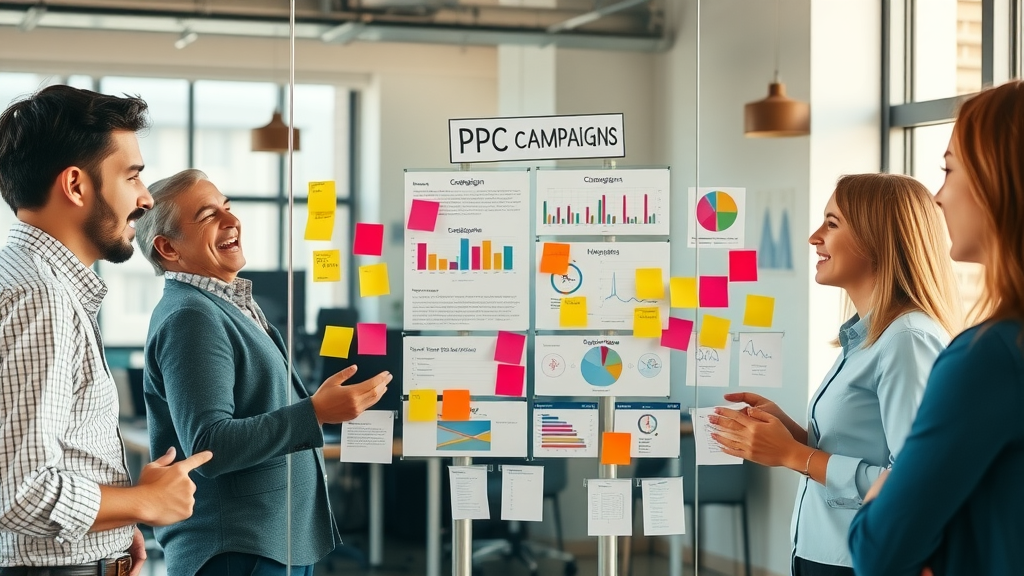
Building a winning ppc campaign starts long before your first ad goes live. From setting up your Google Ads account to designing compelling ad groups and writing persuasive copy, every step counts toward your ultimate ROI. The foundational anatomy? Goal alignment, targeting, rigorous organization, and continual testing.
A well-structured ppc campaign begins with identifying your unique business objectives and matching those to the correct campaign type (search, display, shopping, or video). Next is keyword research—zeroing in on terms your audience actively uses and structuring them into tightly themed ad groups for maximum relevance. Layer in high-converting ad copy, strategic bidding, and robust tracking, and you have the building blocks for scalable campaign success.
By focusing on these fundamentals, you minimize wasted budget while maximizing your visibility at the most critical moments on the search engine results page and throughout the digital marketing landscape.
Setting Up Your Google Ads Account for Effective PPC Marketing
Success with ppc marketing begins with a well-organized Google Ads account . Start by clearly separating your ad campaigns by business objective—whether it’s driving sales, generating leads, or building brand awareness. Within each campaign, use ad groups to segment keywords by theme and audience intent, ensuring your ppc ads remain relevant to every search query.
Advanced options in your Google Ads account —like custom tracking, geographic targeting, and device-level bids—allow for precise control over how and where your ads appear. Don’t overlook conversion tracking—it’s the only way to measure which keywords, ad groups , and landing pages deliver real value and where your optimization efforts will have the most impact.
Regular audits of your ads account can root out errors, uncover missed opportunities, and set the stage for continuous PPC performance improvements.
Structuring Ad Groups for Relevance and Reach

The secret to a high-performing PPC account lies in your ad group structure. Tightly themed ad groups —each centered around a small set of highly related keywords—improve your quality score , ad relevance , and click-through rates. For example, instead of dumping all your keywords into a single group, split them out by product or service line, geographic location, or customer intent.
Each ad group should feature several closely matched keyword variations, with unique ad copy tailored to that audience’s search intent. This approach ensures that each user sees an ad perfectly matched to their query, boosting not only clicks but also conversions.
Consistent structure in your ad groups simplifies bid adjustments, makes split-testing ad copy easier, and helps you spot underperforming keywords that drain your campaign’s effectiveness.
Writing High-Impact PPC Ads That Convert
Copywriting is where your ppc marketing meets the prospect’s search—all in a few lines of text. To craft ppc ads that convert, use clear, benefit-driven headlines and strong calls to action. Address your target customer’s pain points and offer specific solutions—think “Get a Free Quote Today” or “Save 30% on [Service].”
Personalization is key. Dynamically insert keywords relevant to each ad group into your ad copy to boost relevance and earn a higher quality score . Focus on features, benefits, and emotional triggers that set your offer apart from competitors. Remember, the goal is to drive not just clicks—but quality clicks that convert on your landing page .
Continually experiment with multiple ad variations per group. Use performance data to identify which headlines and descriptions deliver the best click-through and conversion rates, then iterate for ongoing improvements.
Understanding Quality Score in PPC Marketing
Your quality score is a pivotal metric in ppc marketing . Google uses it—alongside your bids—to calculate ad rank , which determines how, when, and where your ad appears on the search engine results page. Quality score is based on three pillars: expected click-through rate, ad relevance, and landing page experience.
Improving your quality score can lower your cost per click, earn you higher ad placement, and increase the effectiveness of every dollar spent. Regularly review quality score diagnostics for all keywords and ad groups, then take corrective action—relevant ad copy, fast load times, and tight keyword-to-ad alignment are all critical factors.
Focusing on quality over quantity is essential. Your campaigns should strive for fewer, highly targeted keywords and ad groups with copy and offers crafted to match user intent at every step.
Cost Per Click and Budget Optimization Strategies

One of the biggest mistakes in ppc marketing is letting your campaigns run on autopilot without tight budget and cost per click controls. By aligning your bids with true business goals and refining ad spend allocation, you ensure that every click is a smart investment—fueling your path to positive ROI.
CPC and budget management start with market research. Identify your competition’s benchmarks, determine your ideal cost per acquisition, and back into your target CPC and daily budget. Employ smart bidding strategies tailored to your conversion goals—not just click volume—and set up cost alerts to avoid runaway spend on underperforming keywords.
Ongoing budget optimization is all about iteration: monitor performance, shift funds to high-performing ad groups , and cut spend on low-return areas. This data-driven discipline keeps your ppc campaigns profitable even as your business or market evolves.
How to Set Realistic Budgets for PPC Campaigns
Budgeting for ppc campaigns is more than picking a number—it’s about understanding your goals, competitive landscape, and conversion data. Start by defining what a “conversion” is worth to your business. Calculate your average profit per sale or lead, then set your maximum cost per click so that every click has the potential to earn a positive return.
Use historical data and industry benchmarks as a starting point. Don’t be afraid to start small, test, and increase budgets where you find traction. Tools within Google Ads allow you to simulate outcomes at various spend levels, helping you avoid both under- and over-investing. Regularly review your budget allocation by ad group , campaign, and device to maximize every dollar.
Remember, flexibility and responsiveness are key—shift budgets toward high-performing keywords and cut spend from channels that don’t deliver measurable value.
|
Comparison of Industry Average Cost per Click Rates by Sector |
||
|
Industry Sector |
Average CPC (Search) |
Average CPC (Display) |
|---|---|---|
|
Legal |
$6.75 |
$0.72 |
|
Finance & Insurance |
$5.16 |
$0.63 |
|
E-commerce |
$1.23 |
$0.41 |
|
Healthcare |
$2.62 |
$0.58 |
|
B2B |
$3.33 |
$0.79 |
|
Technology |
$2.31 |
$0.51 |
Bidding Strategies in Google Ads and Paid Search
Google Ads offers multiple bidding options for ppc ads , each with strengths and tradeoffs. Manual CPC gives you precise control, while smart bidding options—like Target CPA (cost per acquisition) or Target ROAS (return on ad spend)—leverage Google’s machine learning to optimize for conversions rather than just clicks.
Start with manual or enhanced CPC if you need oversight, then test automated bidding as you gather reliable conversion data. Smart bidding can react to real-time signals such as device, location, time of day, and audience to boost your ad rank and efficiency.
Successful advertisers regularly review performance by campaign, ad group , and keyword, pausing or reducing bids on low-performing segments while scaling up investment where returns are proven.
Case Studies: Turning Around Underperforming PPC Campaigns
Expert quote: “The one PPC tweak that doubled our ROI in less than 30 days was focusing on negative keywords and landing page alignment. Don’t overlook the power of refinement!”
Seeing is believing—so let’s look at real-world ppc campaign turnarounds. By applying the best practices outlined here, many businesses have rapidly reversed declining ad performance , slashed wasted spend, and multiplied their conversion rate. These examples prove that even a modest change in strategy can spark outsized improvements.
Whether the issue was bloated ad groups , missing tracking, or a mismatch between keywords and ad copy , data-driven fixes consistently deliver measurable growth—often in less than a month.
Before and After: Real-World PPC Advertising Turnarounds

Consider a B2B software firm whose ppc ads cost was climbing, while leads stagnated. A close inspection revealed that multiple broad-match keywords were sending unqualified clicks, ad groups were unfocused, and landing pages were slow and off-message. By restructuring the ads account , tightening keyword targeting, and improving ad copy, the company saw cost per click drop by 48% and conversion rate double within six weeks.
Similarly, a retail e-commerce brand slashed waste by implementing a strong negative keyword strategy, segmenting campaigns by product category, and A/B testing new creative. These adjustments delivered a 30% increase in sales with no uptick in budget—proving that even mature advertisers can find meaningful wins with the right optimizations.
The key lesson? Consistent review and iterative improvements lead to dramatic gains—even for campaigns once written off as money pits.
Top Lessons Learned from Failed and Fixed PPC Ads
Every failed campaign is a treasure trove of actionable insight. Marketers frequently neglect the basics: detailed tracking, dedicated landing pages for each ad group , and strategic use of negative keywords. Weak or irrelevant ad copy and neglected quality score criteria can derail even the largest budget.
When campaigns are fixed, top outcomes typically include improved reporting (with conversion tracking), higher quality scores on targeted keywords, and better ROI through tailored ad copy and landing page alignment. The takeaway? Small, data-driven tweaks can transform an underperforming campaign into a revenue engine and offer a sustainable template for future growth.
Above all, invest in data literacy—a deeper understanding of which metrics matter—and use automation where appropriate to free up resources for creative experimentation.
Common Pitfalls in PPC Marketing and How to Avoid Them
-
Poorly structured ad groups leading to irrelevant ppc ads and high cost per click
-
Ignoring quality score and ad relevance in your ad group or ads account
-
Mismanaging bids—either overbidding (wasting budget) or underbidding (missing out on top placements)
-
Weak ad copy that fails to match user intent or stand out in the search engine results
The remedy for most pitfalls is discipline: keep ad groups tightly focused, test multiple ad variations, pay attention to bid adjustments, and always prioritize user experience on your landing page . Vigilance and regular audits ensure temporary slips don’t turn into chronic waste.
Another overlooked error is failing to embrace negative keywords. By excluding irrelevant or low-converting terms, you can protect your budget and send higher-quality traffic to your business, improving conversion odds and customer satisfaction simultaneously.
Optimizing Your PPC Ads for Maximum Results

Optimization isn’t a one-time task—it’s the ongoing engine behind ppc marketing success. The highest-performing campaigns are those with continual A/B testing, negative keyword expansion, and dynamic bidding. Every change, from a new headline to a fresh call to action, is a chance to boost your results and lower your cost per click over time.
Always test—never assume! By developing a culture of experimentation and acting on data rather than guesswork, you’ll outpace competitors stuck in “set-and-forget” mode. Deploy tracking and analytics to ensure every campaign tweak is measured, and double down on what works best in your unique market.
Staying responsive to trends, seasonality, and user feedback ensures your ads remain fresh, relevant, and high-converting for the long haul.
A/B Testing Search Ads for Higher Click-Through Rates
A/B testing—comparing different versions of your search ads —is the simplest way to determine what resonates with your audience. Test different headlines, descriptions, value propositions, or display URLs in your ppc ads to find combinations that consistently earn more clicks and conversions.
Run your experiments for a statistically significant period—typically at least a week per test—and make changes one variable at a time. Analyze performance by ad group and segment results by device, time, or audience to uncover deeper insights. Continue refining; even minor changes can create outsized impacts on your cost per click and campaign profitability.
Keep records of winning tests to inform future campaigns and use discoveries to continuously raise your performance bar.
Leveraging Negative Keywords to Reduce Cost Per Click
Negative keywords are the MVPs of ppc marketing cost management. By telling platforms which searches you do NOT want your ads to appear for, you prevent wasted spend on irrelevant clicks, lower your cost per click , and sharpen your audience targeting.
Create exhaustive lists of negative keywords based on past campaign data, search term reports, and industry research. Update these regularly—and consider excluding competitors, bargain hunters, or unrelated product terms that don’t fit your offer.
Even small refinements in negative keyword lists can lead to dramatic improvements in campaign ROI, higher ad rank , and lower CPA—making it an essential habit for every PPC advertiser.
PPC Marketing FAQs: Answers to Common Questions
What is SEO vs PPC?
SEO (Search Engine Optimization) is the process of earning free, organic placement on search engine results through content and optimization strategies, whereas PPC (Pay-per-click) marketing involves paying for ad placement at the top of search results, paying each time a user clicks your ad. Both approaches are fundamental to a complete digital marketing strategy .
What is PPC Marketing Examples?
PPC marketing examples include Google Ads (search ads that appear atop Google results), Bing Ads, Facebook and Instagram sponsored posts, LinkedIn sponsored content, display ads on websites, and YouTube video ads. All involve paying for traffic to your site or offer via digital ad platforms.
What is CPC vs PPC in Marketing?
CPC (Cost per Click) refers to the price you pay for each click your ad receives, while PPC (Pay-per-click) marketing is the advertising method itself. In other words, CPC is the metric; PPC is the model.
What is PPC and SEM Marketing?
PPC (Pay-per-click) is a form of online advertising where you pay for each click, while SEM (Search Engine Marketing) is a broader digital marketing category that covers all paid and organic strategies to increase search engine visibility, including SEO and PPC.
-
SEO vs PPC: SEO is free and focuses on organic rankings; PPC is paid and delivers instant visibility.
-
PPC Marketing Examples: Google Ads, Bing Ads, Facebook sponsored posts, LinkedIn ads, display campaigns.
-
CPC vs PPC: CPC is the price per click; PPC is the pay-per-click advertising model.
-
PPC and SEM: PPC is a type of SEM, which includes both paid (PPC) and unpaid (SEO) tactics.
Proven PPC Marketing Strategies for Long-Term Success
-
Audit your Google Ads account regularly for structure and performance gaps.
-
Continuously refine ad groups for close keyword themes and intent alignment.
-
Test multiple ad variations per group for headline, CTA, and messaging effectiveness.
-
Implement comprehensive negative keyword lists and update periodically.
-
Measure results on key KPIs: conversion rate, cost per click , and quality score .
-
Shift budgets towards high-performing keywords, ads, or audiences.
-
Invest in landing page improvement—faster load, relevant content, persuasive layout.
-
Use smart bidding strategies as your data matures.
-
Review and optimize for mobile and device-specific user behavior.

Key Takeaways for PPC Marketing Success
-
Start with solid ad group structures and always match your ad copy to searcher intent.
-
Monitor and reduce cost per click with regular bid adjustments and negative keywords.
-
Use A/B testing to continually refine and improve your ppc ads and landing pages.
-
PPC success is iterative—review data, optimize relentlessly, and never stop learning.
-
Seek professional help for audits and ongoing campaign management if you’re struggling to achieve ROI.
Ready to Supercharge Your PPC Marketing?
-
Audit your current ppc campaigns for wasted spend and missed opportunities now.
-
Consider scheduling a professional review to uncover quick-win optimizations.
-
Sign up for a tailored digital marketing consultation and start mapping your path to measurable PPC results—and real business growth—today.
Leave a Reply